Cycling in Goa
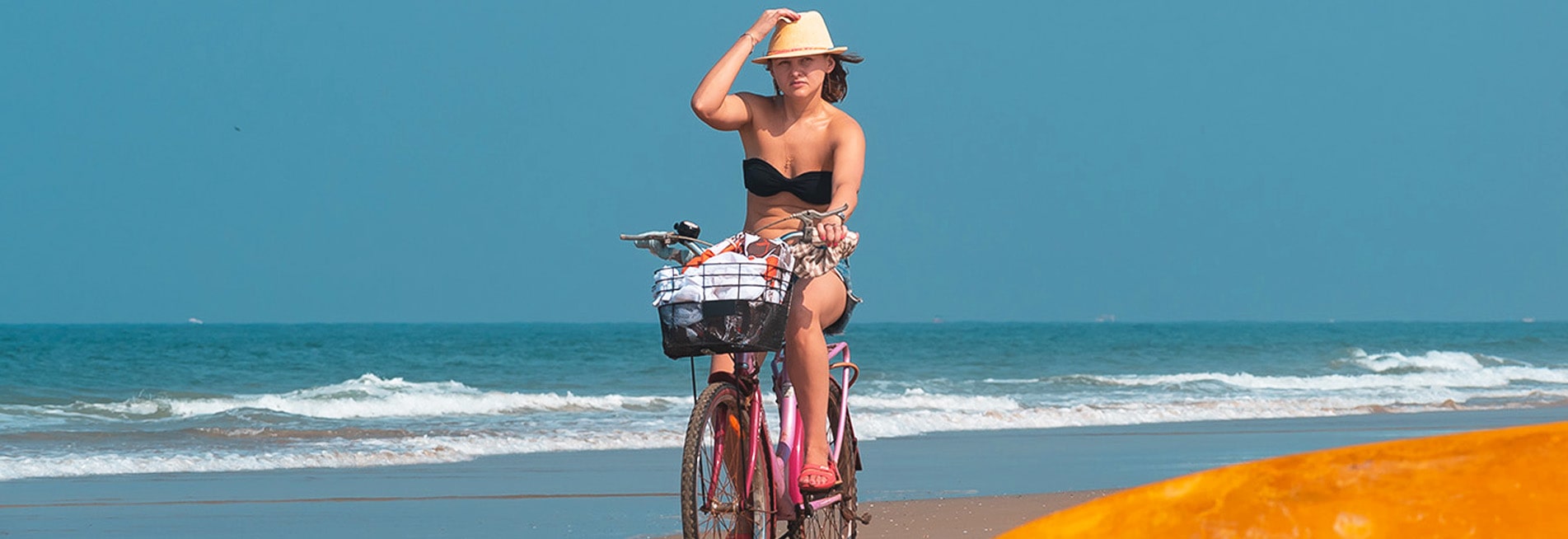
Our Goa Cycling Tour is designed to give you a unique biking experience of the coastal state best known for its gorgeous beaches, hippie culture, freewheeling party scene, and colonial Portuguese heritage.
Goa, located in southwestern part of the country, is the ultimate destination for a beach holiday in India. Tourists from across the world come here to surf, jet-ski, paraglide, to lounge around on beaches, get the suntan, enjoy its party life and experience its peculiarly hybrid Konkani-Portuguese culture and cuisine. Yet, many of them rarely wander beyond the popular tourist hotspots of Goa, thereby missing the other wonders that lie nearby but rarely find mention in the travel brochures.
On this cycling tour of Goa, we take you to the popular spots and also to many far-off landmarks, such as old forts, churches, temples, heritage houses, museums, rural countryside, quaint villages, fish markets, paddy fields, palm groves and such. The idea is to cover the entire state from north to south so that you get to experience Goa like never before, and that too at your leisure, on a bike.
Our Goa cycling holiday takes off at the Cavelossim village in South Goa. Starting out with shorter cycling excursions to northern beaches, villages and towns in the initial days, we expand the loop to cover far-off hotspots as the tour progresses. We pedal into the villages and towns of Fartrade,Pedda,Benaulim,Varca,Orlim, Carmona, Colva, BetulBatim, Majorda, Utorda, Cansaulim and Velsao.
A whole day is dedicated to exploring Old Goa and the capital Panaji (Panjim) and the adjoining areas. Here, we come upon the heritage of the 450-year-long Portuguese colonial rule, such as the 17th century Our Lady Of The Immaculate Conception Church, which has Baroque architectural elements.
Our northward Goa biking excursion takes us, first across the river Mandovi to the 17th century Fort Aguada (known for its circular lighthouse), and then across the river Chapor to the quiet and beautiful beaches of Mandrem, and then across the Tiracol river to the namesakefort.
At this point, we touch the northernmost extremity of Goa right on the end of the first week of cycling in Goa.
Thereafter, we return to our Goa biking trip’s starting point, that is Cavelossim and start exploring the areas and landmarks to the east and south, one of which is Shri ChandreshwarBhootnath Temple located on top of a hill. Getting there tests your biking mettle. We also drop by the famous Braganza House, a museum that used to be the home of a once-influential Portuguese family.
The coming days see us biking to Cabo De Rama, a fort built at a place where, it is believed, Lord Rama stayed with his wife Sita during his 14-year exile from kingdom. Wildlife lovers will enjoy a short visit to Cotigao Wildlife Sanctuary, and the last few days are reserved for lounging around on Palolem Beach, one of the best beaches of Goa.
Biking adventure and holiday outings go hand-in-hand on our 13-day Goa cycling trip. We keep moving from plains to hills (not steep ones) and from beaches to palm groves and paddy fields. We shop at Goa’s most famous Anjuna Market (great bargains for a variety of souvenirs) and explore the state’s weekly bazaars as well.
The accommodation on the tour ranges from humble beach lodges to top-class hotels and resorts. During our excursions, we lunch or dine out at some of the best restaurants of Goa. We even hit the party circuit to give you a taste of Goan revelry.
All this and a lot more are packed in our biking tour of Goa. Check out the Goa biking tour itinerary for more details.
.Goa - Panjim - Fort Aguada - Anjuna - Mandrem - Tiracol Fort - Mandrem - Cavelossim - Shree Chandreshwar Temple - Chandor - Cavelossim
12 Nights / 13 Days
Day
1
Arrival at Goa
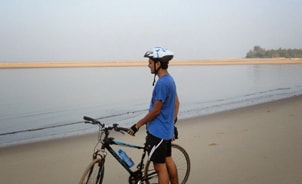
On the first day of Goa Cycling Tour, our team leader meets you at the Goa International Airport upon your arrival and drives you to a pre-booked hotel. If you plan to arrive by train or bus, the tour leader or driver picks you up from the designated spot and transfers you to the hotel in Cavelossim, a village in South Goa. The day is reserved for resting and walking around the nearby beach to soak in the Goan vibes. Each guest is handed his or her bike, which the guest may try out and go for a short spin in and around Cavelossim.
Day
2
BIKING TO NEARBY VILLAGES FOR GOA SIGHTSEEING
Biking formally kicks off at Cavelossim on the morning of the second day. A brief meeting is held to give you the details of the day’s destinations and biking route. Thereafter, we mount the saddles and hit the road. We ride out to the villages and towns of Fartrade,Pedda,Benaulim,Varca,Orlimand Carmona, before returning to Cavelossim. It’s a circular route that cuts through paddy fields, coconut groves and small hamlets of Goa. We also get to explore some beaches along the way. The idea of this daylong tour of about 30 km is to give you an intimate flavour of Goan culture and rural life. The route winds through a mostly flat landscape and makes for a good warm-up cycling experience to prime you up for tougher rides in Goa cycling adventure ahead. We overnight at the hotel in Cavelossim.
Day
3
BIKING TO NORTHERN TOWNS/VILLAGES
On the third day, we take the coastal route northwards. The trail runs parallel to the beaches on the left and villages on the right. It takes us to the villages of Carmona, Orlim, Varca, Benaulim, Colva, Betalbatim, Majorda, Cansaulim and finally Velsao. This biking trail introduces us to some of the famous beaches of Goa, namely Varca beach, Benaulim beach, Colva beach, and finally Velsao beach. If you so wish, you may take a break and explore any of these beaches along the route. There’s so much to do that the beach buffs may feel spoilt for choice. The day’s cycling itinerary is designed to throw in a lot of fun and joy into the Goa biking vacation. We try out the restaurants and best swimming spots along the way. At the end of the day’s cycling, we ride back to Cavelossim for dinner and overnight.
Day
4
REST DAY FOR EXPLORING BEACHES AND MARKETS
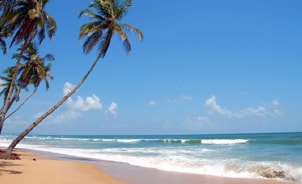
The first three days of our Goa cycling tour introduces you to many beaches and villages. Often, at this point of the tour our guests ask for a day’s break to explore, at leisure, some of these hotspots on their own. That’s the reason we’ve put in a rest day in our itinerary. It’s a breather to let you roam around at the places you are now familiar with and revisit some of the beaches you may have liked but didn’t spend enough time at, on the first visit. We personally recommend a visit to Margao, which is often called the commercial capital of Goa. The name literally means the ‘village of monasteries’ and was a bustling religious centre in the 15th and 16th centuries. Now, its main attractions are the Portuguese-built churches, most prominent being the Holy Spirit Church. The faithful can also check out the Damodar temple, Hari temple, Maruti temple and Saibaba temple.A fish and spice market in Margao attracts local crowds. For tourists, a visit to the colonial mansion named Seven Gables House, is advised. We overnight again at Cavelossim.
Day
5
CAVELOSSIM – OLD GOA – PANAJI (PANJIM)
All the energy you gain during the rest day will be put to good use on our trip to Old Goa. The biking trail takes us over some hillocks to test your stamina and kick up the adrenalin, but the trip is well and truly worth it. Old Goa used to be the capital of the colonial Portuguese from the 15th century to the 18th until a plague ravaged through the city and caused massive abandonment. The remains of the old city stand to this day and are a UNESCO World Heritage Site. Among them are the renovated old chapels, basilicas and churches, the most famous being the Church of St. Francis of Assisi, Basilica of Bom Jesus (it contains the relics of St. Francis Xavier), Chapel of St. Catherine, Church of St. Cajetao, Se Cathedral, St. Anne’s Church, and the ruins of the Church of St. Augustine. After the abandonment of Old Goa, the Portuguese chose Panjim (now called Panaji) as their new capital. It is there we head to after cycling to Old Goa. Upon arrival, we check into Panaji Residency hotel and go out to dine at one of the best eateries in Goa.Overnight at Panaji.
Day
6
PANAJI – FORT AGUADA – ANJUNA – MANDREM
Panaji is a city with its share of tourist hotspots. If you are inclined to, we may visit some of them in the morning, before heading northwards. The day’s cycling starts with a ferry ride across the Mandovi river,followed by a short biking trail to Fort Aguada. Built by the Portuguese in 1612 to guard against the Dutch and Marathas, Fort Aguada is strategically located on the upper part of the landmass that juts out into the Arabian Sea. It’s not a very massive structure, but is smartly built in the old Portuguese fashion to ward off attacks and it has a lighthouse to spot the incoming ships. From the fort, we take the northward route that passes through Candolim (known for its beach), Calangute (popular for its beach), to Anjuna where we visit the famous Anjuna Market that offers great bargains for a number of goods, from garments to junk jewellery. Pressing further north, we cross the Chapor river to arrive at Mandrem, where we check into the popular Dunes Beach Resort. This resort shall be our accommodation for two back-to-back nights.
Day
7
MANDREM – TIRACOL FORT – MANDREM
Day
8
Mandrem - Cavelosim
A very long day lies ahead of us as we leave Mandrem to head back to South Goa. The distance from Mandrem to Cavelossim is 71 km, and the Goa cycling trail goes over some hillocks to challenge the biking buff in you. Many cyclists take up the gauntlet and push themselves to cover this long stretch by their pedal power. This is the ride meant to test your biking endurance. But there is no compulsion to do it. You may simply hop into the back-up vehicle and enjoy the ride. We go south the way we came up. Doing so gives you the chance to explore again some of the Goa beaches or other landmarks that may have caught your fancy the first time around. The long day’s ride concludes at Cavelossim, which was the starting point of our biking adventure of Goa. We check into the hotel, and you may go out on a stroll to the beach or just crash out in your room after the busy day of cycling
Day
9
Cavelossim - Shree - Chandreshwar Temple - Chandor - Cavelossim
Having explored North Goa, we now head to the east. The highlight of the day’s biking is the uphill stretch to Shri Chandreshwar Temple near Paroda. The temple is situated on top of a hill and a five-km long ascent is nature-made for bikers seeking a contest with the road. The view from the top is breath-taking, but it’s the temple that puts you in real awe. The original temple was built here in the 4th century CE and has since been rebuilt and renovated many times over, but the lingam in its sanctum sanctorum is said to be the original and in situ. The temple is dedicated to the Lord Chandreshwar (literally meaning the Moon God), an incarnation of Lord Shiva. After the temple visit, we bike northwards to Chandor to drop by the Menezes Braganza House, which once belonged to an influential Portuguese family, but has now been converted into a museum. There is a good chance that you will meet the last descendent of the family who will show you around the place. What makes the family popular is their support for Goa’s freedom from the Portuguese rule. As the evening wears on, we cycle back to our hotel in Cavelossim.
Day
10
Cavelossim - Cabo De Rama - Palolem
More trip down history lane awaits us on this day as we travel southwards to Cabo De Rama. The name literally means the Cape of Rama, referring to the highland jutting out into the Arabian Sea. Legend has it that Lord Rama of the epic Ramayana stayed here for some time during his 14-year exile from the kingdom in North India. Owing to its strategic location from a military point of view, a fort was built here and changed hands from one ruler or invader to another. What’s left today are the ruins of the Portuguese Fort, hence the name. From the height of the fort, one gets a panoramic view of the nearby beaches and the vast Arabian Sea. Inside the fort, there still exists a church which has been kept in good condition by the faithful. We take a picnic lunch at the fort and then ride over the ghats towards the Palolem beach, where we check into a hotel or beach lodge just in time to spare lazy moments on the shore. We dine and overnight at Palolem.
Day
11
Palolem - Cortigao Wildlife Sanctuary - Palolem
Those hoping for a close encounter with the wildlife of Goa will have their wish granted during the biking adventure to Cotigao Wildlife Sanctuary, located on the south-eastern tip of Goa. A trip into the sanctuary is likely to throw up sightings of animals such as flying squirrel, four-horned antelope, Indian pangolin, slender loris and several birds like Malabar trogon, White-bellied woodpecker, Velvet-fronted nuthatch, Heart-spotted woodpecker, and Malayan bittern. There are several nature trails in this sanctuary, and one particular trail leads to a treetop watchtower located high above a watering hole where animals go to quench their thirst. Culture enthusiast will be pleasantly surprised to find some tribal groups living within the sanctuary. These tribal people are quite friendly and we might even get to interact with them. We end the day with a 23 km long invigorating bike ride back to Palolem where we dine and overnight.Palolem is also famous for its nightlife, especially the silent discos where guests wear headphones to avoid causing any noise pollution. Interested bikers may check out one of these disco parties before calling it a day.
Day
12
Palolem - Cavelossim
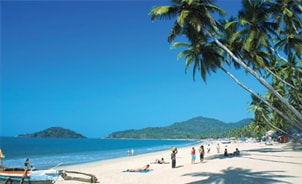
This day is reserved for relaxing and enjoying the beaches. We have arrived at the fag end of Goa cycling adventure and we cap it by pampering our senses. The morning is spent at and around the beautiful Palolem beach. The sea here is usually calm and just lounging around on the beach is a soothing experience. Palolem is often ranked as one of the best beaches in India. As the day wears on, we pack up and leave for Cavelossim to arrive there just in time for evening beach strolls. Goa biking tour is close to its end here and we ensure to make your last night special.
Day
13
Departure
After an early breakfast, we check out of our hotel and depart for the airport. Our driver drops you in time for your flight. The biking adventure of Goa officially comes to an end.
-
Experience Goa Like Never Before on Goa Cycling Tour
Posted on 12 Dec, 2020 -
Cycling In Goa For Incredible Adventure And Experience
Posted on 03 Dec, 2016 -
Cycling In Goa For Untapped Goa Experience
Posted on 27 Aug, 2015 -
Ignite your adventure freak with cycling in Goa
Posted on 30 Nov, 2014
Latest Articles Update From Blog
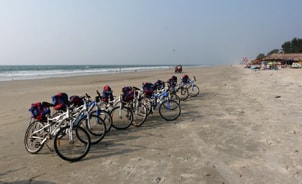
Bikes: Mountain Bikes
Bike Sizes: 13-21
Bike Hire: Includes on Tour Cost. You may bring your own bikes, but in this case let us know in advance. Other equipment provided: Pedals, helmet, water bottles.
Accommodation
Accommodation is offered at all locations. Most of the hotels are Culture Resort, Eco Resorts & family run hotels - all with a common line of quality in service. Our costs are based on 'twin-sharing' foundation. For those who wants single room, we offer single room, but at extra cost.
Terrain
The landscape includes flatlands, mountains, backwaters and village streets.
Climate
The variety of the regional features of this country has led to a corresponding variety in environment. The Great Varies have awesome environment throughout the year, while the flatlands are warm and moist. The common level of yearly rain fall is superb in Kerala, Sikkim and some of the Northern Eastern Declares of Native India, when compared to other Native India. July to Aug is the monsoon season, with heavy downpours. It is always recommended to check weather and temperature at websites.
Transportation/Support Vehicles
All transport is involved in the cost. We provide backup vehicle at all times during cycling trip. The vehicle can be used to boat your baggage & yourself as required.
Food
Food is a very essential part of these trips. We make sure that the meals we offer is method delicious, unless you ask for dull meals. You are also permitted the choice of veggie or non-vegetarian meals. We suggest that you consume only the canned standard water. Please make sure that the container is enclosed.
What to bring
Footwear
- Bike shoes
- Sun cream lotion
- Relaxed shoes for walking
- Shoes for other sightseeing
- Socks
Clothing
- In Indian, the conventional of outfit is more traditional. We counsel you to prevent very short shorts/skirts and limited tops/tanktops when viewing small non-urban places, temples, mosques or other sacred sites as this may limit your access.
- A hotter set of outfits (Fleece, Coat, hat and gloves) are required for visits going through Munnar and other thin air places.
- Water resistant jacket.
- Riding a bike equipment like safety gloves and shorts.
Others
- Torch
- Mosquito repellent
- Eyewear, cap
- Sun lotion of spf at least 35
- Individual Bike riding equipment like bar finishes, pedals, chairs and headgear
- Helmets for riding a bike
Health
Water is higher risk; hence we suggest that you drink only nutrient water in bottles during your trip. A cage of standard nutrient water is always focused for in the start of the vehicle during trips as an urgent evaluate. Despite the high requirements, it is worth providing basic OTC medications for disappointed tummies, complications, pest attacks etc. Indian is a financially creating democratic republic and has worked very hard to control illnesses. Sufficient medical care is available in the major inhabitants' facilities, but is usually limited in the non-urban areas of the country. Many western worlds are utilizing the state-of-the-art healthcare services available in Indian. The cost of treatment is much less expensive here in comparison to the same features available in innovative nations.
The most important cause of sickness of tourists in Indian is food and water-borne illnesses. Malware, bacteria, or harmful bacteria can cause diarrhea. Attacks may cause simple diarrhea and throwing up, high temperature, or, in extraordinary instances, liver organ damage (hepatitis). Malaria is a avoidable disease that can create trouble if neglected. One can prevent disease by taking recommended anti-malarial drugs and defending against insect attacks. The areas you will be passing are Malaria-free. Make sure that your insurance provider includes illnesses and injuries overseas.
Precautions
- Bring all the important medications and OTC medications. Do not ignore to have the brands as well as the general titles of the medications one needs to have.
- Use a sun hat when revealed.
- Consume a lot of liquids. Don't drink tap water. Use only bottled water which is always kept in the back of your automobile.
- Bring your personal medical kit and pest resilient.
- To avoid fungus and parasitic attacks, keep legs clean and dry, and do not go without shoes.
- Do not eat food bought from road providers.
- Do not drink drinks with ice.
- Do not eat milk products unless it is known that they have been pasteurized.
- Prevent managing creatures (especially apes, pets, and cats) to avoid attacks and serious illnesses.
Medical Information Update
Details given above are liable to change every now and then and one should contact the Native India tasks of the specific country or the government vacationer offices for more details.
Shopping
You will get possibilities en-route to do a bit of purchasing. However unless particularly requested for, our guide will not suggest any particular store. Neither we nor our driver/guides take any percentage on purchasing.
Spending Money
Every visitor will have different cash specifications and varying personal costs. Please assess your own spending routines while enabling for beverages, purchasing and falling. Also keep aside cash for extra costs like:
- Foods which are not included
- Emergencies
- Optionally available activities /additional sightseeing
- Shopping/Souvenirs
Foreign Exchange
As Indian currency value tend to go up and down, make reference to the following website for daily return rates: www.xe.com.
Airport Taxes
There is no airport terminal or leaving taxation from any airport terminal of India.
Exclusions
- Insurance Policy - Please take your own Insurance
- Tips
- Beverages
- Laundry
- Telephone bills
- Cycles
- Support Vehicle, parking, toll, driver's allowances
- Cycling guide
- Breakfast at all destination
- All Accommodation on Full board
- First Aid Kid
- Backup of Support Vehicle